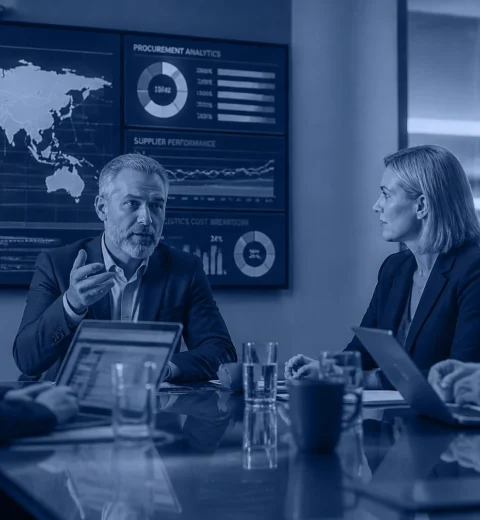



Operating within highly competitive, capital-intensive, and safety-critical manufacturing environments requires VPs of Procurement to constantly balance cost containment, operational continuity, and supplier risk. Yet, many industrial enterprises continue to rely on legacy purchasing departments hampered by fragmented spreadsheets, manual purchase-to-pay workflows, and siloed data systems. To achieve sustainable scalability and operational excellence, executive leadership must drive comprehensive digital transformation across their procurement functions.
We examine the strategic imperatives, technical upgrades, and leadership capabilities required to modernize legacy purchasing departments and future-proof the manufacturing supply chain.
Uncovering Bottlenecks in Legacy Procurement Operations
In traditional manufacturing organizations, procurement departments frequently operate as reactive, administrative units rather than proactive, strategic hubs. VPs of Purchasing face systemic challenges characterized by maverick spending, delayed supplier approvals, and opaque visibility into raw material lead times.

To overcome these structural hurdles, organizations must execute a rigorous current-state assessment focusing on three critical vectors:
- Process Standardization: Mapping end-to-end workflows to eliminate redundant approvals, manual purchase order generation, and paper-based invoicing.
- Technology Integration: Auditing legacy ERP interfaces and standalone point solutions to identify data silos, duplicate entries, and communication gaps.
- Talent Optimization: Evaluating organizational capabilities to transition tactical buyers from transactional processing toward advanced analytics, strategic sourcing, and supplier collaboration.
By identifying these friction points, leadership can establish a disciplined foundation for process optimization and technological integration.
Modernizing the Source-to-Pay Tech Stack
Driving effective digital transformation necessitates moving beyond piecemeal fixes toward an integrated Source-to-Pay (S2P) architecture. For manufacturing enterprises, modern software suites must seamlessly interface with existing enterprise resource planning (ERP) and manufacturing execution systems (MES) to ensure real-time visibility into production schedules, inventory thresholds, and bill-of-materials (BOM) requirements.

Key pillars of a modern manufacturing procurement tech stack include:
- E-Sourcing and Guided Buying: Centralizing category management and enforcing compliance through automated e-catalogs for indirect materials and MRO supplies.
- Supplier Portals: Streamlining order acknowledgements, advanced shipping notices (ASNs), and electronic invoicing to enhance schedule adherence.
- Advanced Spend Analytics: Leveraging automated data cleansing and categorization to uncover cost-reduction opportunities across raw materials, logistics, and packaging.
These tools empower VPs of Procurement to enforce governance, minimize price variance, and drive measurable cost control across all operational plants.
Securing Strategic Leadership for Digital Execution
Technology alone cannot remediate legacy inefficiencies; the success of any digital transformation initiative hinges on the executive leadership driving it. VPs of Procurement must possess not only deep technical acumen in supply chain execution but also exceptional change management capabilities to secure cross-functional buy-in from finance, engineering, and operations.

When recruiting visionary leaders for manufacturing organizations, we deploy a rigorous, multidimensional evaluation framework. By assessing candidates across process optimization, digital literacy, and cultural alignment, we help industrial businesses secure top-tier executives capable of leading complex transformations. Strengthening your leadership bench ensures that your purchasing department evolves from a legacy bottleneck into a powerful catalyst for enterprise growth and supply chain resilience.